

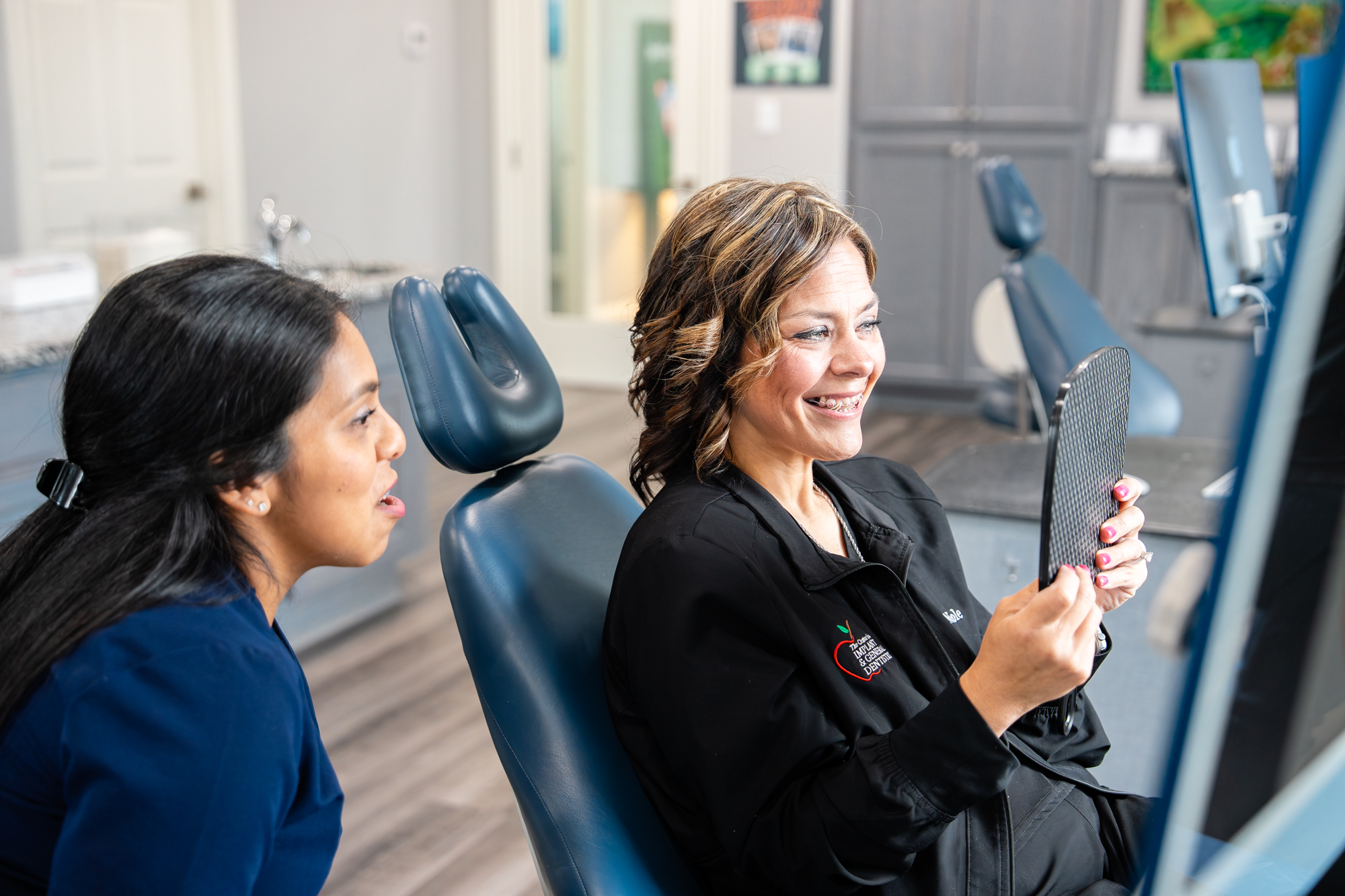
Invisalign vs. Braces in Athens, TX
Choosing between clear aligners and traditional braces is one of the biggest decisions you’ll make when starting orthodontic care. Both options can create beautiful, healthy smiles. The right choice depends on your goals, your lifestyle, and the complexity of your case.
Understanding how each treatment works, what it costs, and who it fits best will help you feel confident walking into your first consult. Here’s what you need to know before making the call.
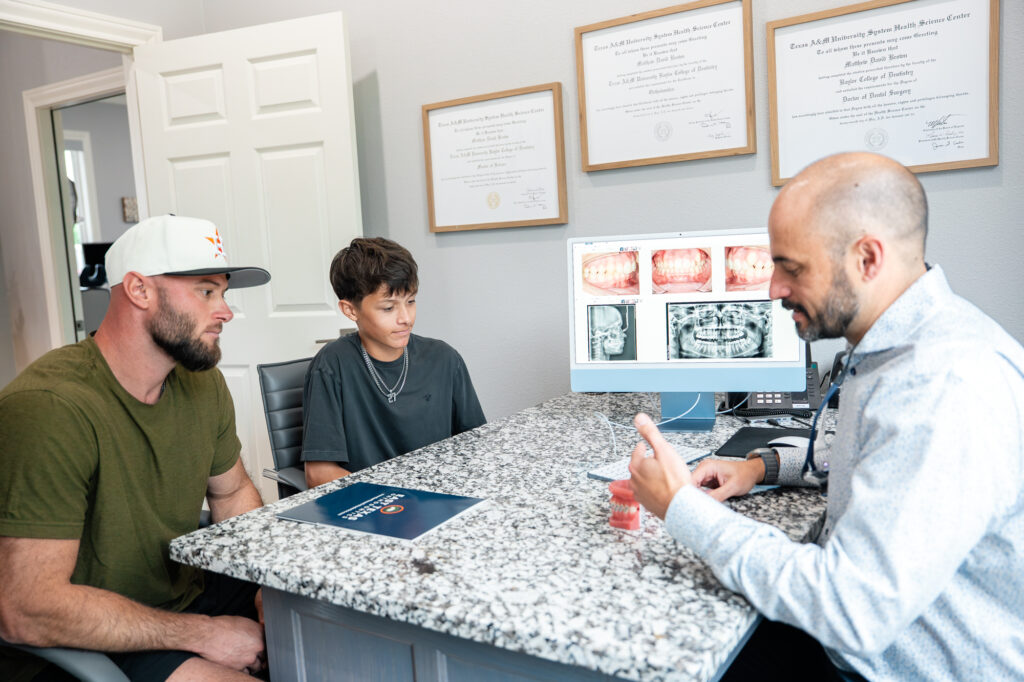
What Are Invisalign and Braces?
Invisalign uses a series of custom clear plastic trays worn 20 to 22 hours a day to gradually shift teeth into place. Traditional braces use small metal or ceramic brackets bonded to your teeth, connected by an archwire that guides tooth movement over time. Both treatments correct crowding, spacing, bite issues, and general alignment concerns.
Invisalign aligners are removable, so you take them out to eat, brush, and floss. You’ll switch to a new tray every one to two weeks as your teeth move.
Braces stay on throughout your treatment. Your orthodontist adjusts the wires during regular visits to keep your teeth progressing on schedule.
Both options are widely available today, and East Texas Orthodontics offers both so patients can choose what works best for their smile. Some smiles respond beautifully to aligners. Others need the steady, precise control that braces provide. The best choice comes down to your lifestyle, the complexity of your case, and your personal preference.
How Each Treatment Works
Both treatments follow a clear, structured process. The mechanics look very different, but the goal is the same: healthy alignment and a confident smile.
How Does Invisalign Work?
- Digital scan. A digital scanner (such as an iTero) captures a detailed 3D model of your teeth. No messy impressions required.
- Custom treatment plan. Dr. Brown and Dr. Borth design your full series of aligners using advanced 3D planning software. You’ll see a preview of your expected results before you start.
- Wear your trays. You’ll receive a series of clear aligners, each slightly different from the last. Switch to a new tray every one to two weeks.
- Attachments and elastics. Small tooth-colored attachments or rubber bands may be added to help guide specific movements.
- Refinements. Near the end of treatment, your orthodontist may order refinement trays to perfect the final result.
Most Invisalign cases take 6 to 18 months, depending on complexity.
How Do Braces Work?
- Bonding. Brackets are attached to each tooth with a safe dental adhesive.
- Archwire placement. A thin wire is threaded through the brackets, applying gentle pressure to move teeth.
- Adjustments. You’ll visit the practice every 4 to 8 weeks so your orthodontist can adjust the wire and monitor progress.
- Elastics and appliances. Rubber bands or additional appliances may be used to correct bite issues.
- Removal and retention. Once your smile is aligned, the brackets come off and you’re fitted with a retainer.
Braces treatment typically runs 12 to 24 months. East Texas Orthodontics uses cutting-edge tools, including completely custom, 3D-printed brackets designed for each patient’s unique anatomy.
Benefits of Invisalign vs. Braces
Each option comes with its own set of advantages. Here’s what stands out.
Why Do Patients Choose Invisalign?
- Nearly invisible. Clear trays are hard to spot, even up close.
- Removable. Take them out for meals, special events, or photos.
- No food restrictions. Enjoy popcorn, pizza crust, apples, and everything in between.
- Easier hygiene. Brush and floss like normal without working around wires.
- Comfort. No brackets or wires to irritate cheeks and lips.
- Fewer emergencies. No broken brackets or poking wires.
Why Do Patients Choose Braces?
- Great for complex cases. Braces handle severe rotations, vertical movements, and complicated bites reliably.
- No compliance required. They’re working 24/7 without any effort on your part.
- Often more budget-friendly. Metal braces are typically the most affordable option.
- Fun customization for kids and teens. Colored bands let younger patients express themselves at every visit.
- Predictable results. For certain tooth movements, braces remain the gold standard.

How Does Lifestyle Affect the Choice?
Think about your daily life. Athletes who play contact sports often prefer aligners because there are no brackets to worry about (a mouthguard still fits easily over them). Musicians who play wind or brass instruments frequently find aligners more comfortable. Working professionals often love the discreet look of Invisalign for meetings and presentations.
Braces shine for younger patients who might forget to wear their aligners. They also work well for anyone who wants a “set it and forget it” treatment that doesn’t require daily discipline.
What Should Teens and Parents Consider?
Invisalign Teen includes built-in compliance indicators, small blue dots that fade to show whether aligners are being worn enough. Teens who prefer braces can pick their band colors at every appointment, making each visit a little more fun and giving them a way to express personal style.
Invisalign vs. Braces: Side-by-Side Comparison
Here’s a quick look at how the two options stack up.
| Feature | Invisalign | Traditional Braces |
|---|---|---|
| Appearance | Clear, nearly invisible | Visible metal brackets (ceramic option available) |
| Treatment time | 6-18 months (mild to moderate cases) | 12-24 months (most cases) |
| Comfort | Smooth plastic, minimal irritation | Occasional wire and bracket soreness |
| Maintenance | Remove to brush and floss normally | Requires flossing threaders or water flossers |
| Food restrictions | None (remove trays to eat) | Avoid hard, sticky, and chewy foods |
| Office visits | Every 6-10 weeks | Every 4-8 weeks |
| Emergency risk | Low (lost tray easily replaced) | Higher (broken brackets, poking wires) |
| Best for | Mild to moderate alignment issues | Complex cases and all ages |
| Compliance needed | Must wear 20-22 hours daily | Always working, no effort needed |
| Cost | Typically slightly higher | Often the more affordable option |
Cost of Invisalign vs. Braces
Orthodontic treatment costs vary based on case complexity, treatment length, and the type of appliance used. Traditional metal braces are generally the most affordable option, with ceramic braces and clear aligners typically priced slightly higher. Every smile is different, so pricing is always personalized to your specific case.
Several factors affect your final cost:
- Case complexity. Simple alignment corrections cost less than complex bite corrections.
- Treatment length. Longer treatment plans require more visits and materials.
- Refinements. Some clear aligner cases need additional trays to perfect the results.
- Type of appliance. Metal, ceramic, and clear aligners each have different price points.
Many dental insurance plans include orthodontic benefits, particularly for patients under 19. Coverage amounts vary, and our team will help you understand what your plan offers before you commit.
To make treatment more accessible, East Texas Orthodontics offers options like:
- Affordable monthly payment options
- Online tools to estimate costs before your visit
- HSA and FSA eligibility
- Flexible in-house financing, including zero-interest plans
The best way to get an accurate number for your smile is a complimentary consult with a board-certified orthodontist. During that visit, your orthodontist can examine your teeth, review your goals, and give you a clear, personalized quote with no obligation.
Who Is a Good Candidate for Each?
Both treatments work well for a wide range of patients. Here’s how to think about which might fit you best.
Who Is an Ideal Invisalign Candidate?
- Adults and teens with mild to moderate crowding or spacing
- Patients who want a discreet treatment option
- People with the discipline to wear trays 20-22 hours daily
- Professionals, performers, and athletes who need flexibility
- Patients with good oral hygiene habits
Who Is an Ideal Braces Candidate?
- Patients with complex bite issues or severe rotations
- Younger children who may lose or forget removable trays
- Cases requiring significant vertical tooth movement
- Patients who prefer not to think about compliance
- Two-phase treatment for growing kids
How Do Age and Health Factors Affect the Choice?
Orthodontics is for everyone. Adults, teens, and children can all benefit from treatment. For younger kids, an orthodontist may recommend two-phase treatment to guide jaw development before permanent teeth arrive.
Existing gum health, dental restorations like crowns or bridges, and TMJ concerns can all influence which option works best. During a consult, Dr. Brown or Dr. Borth will review your full health picture, take 3D digital scans, and walk you through the recommended path forward for your smile.
Frequently Asked Questions
Is Invisalign more expensive than braces?
Invisalign is often slightly more expensive than traditional metal braces, but the gap has narrowed significantly in recent years. Final pricing depends on your specific case, treatment length, and any refinements needed. East Texas Orthodontics offers flexible monthly payment options to make either treatment affordable and manageable over time.
Does Invisalign work as well as braces for complex cases?
Invisalign has advanced tremendously and now handles many cases that once required braces. However, braces still tend to be more predictable for severe rotations, significant vertical movements, and very complex bite corrections. A board-certified orthodontist can review your case in detail and recommend the option that will give you the best results.
Which is more uncomfortable, Invisalign or braces?
Both treatments cause some soreness, especially when you first start or after adjustments. Braces can occasionally irritate cheeks and lips due to brackets and wires. Invisalign trays are smooth and generally cause less irritation, though your teeth may feel tender for a day or two after switching to a new aligner. Most patients adjust quickly to either option.
How long does each treatment take on average?
Invisalign treatment typically takes 6 to 18 months, while braces usually require 12 to 24 months. Timing depends on how much your teeth need to move and how closely you follow your treatment plan. Wearing your aligners as directed or keeping all your braces appointments makes a big difference in the total time you’re in treatment.
Does insurance cover Invisalign?
Many dental insurance plans include orthodontic benefits that apply to both Invisalign and braces, especially for patients under 19. Coverage amounts vary widely between plans. Our team will review your benefits and help you understand what your plan covers before you start treatment, so there are no surprises.
What happens if I lose an aligner or break a bracket?
If you lose an Invisalign tray, contact your orthodontist right away. They may have you move to your next tray early or go back to your previous one until a replacement arrives. For a broken bracket, call the practice to schedule a repair appointment. Orthodontic emergencies happen, and your care team is there to help you stay on track toward confident smiles for life’s adventures.