

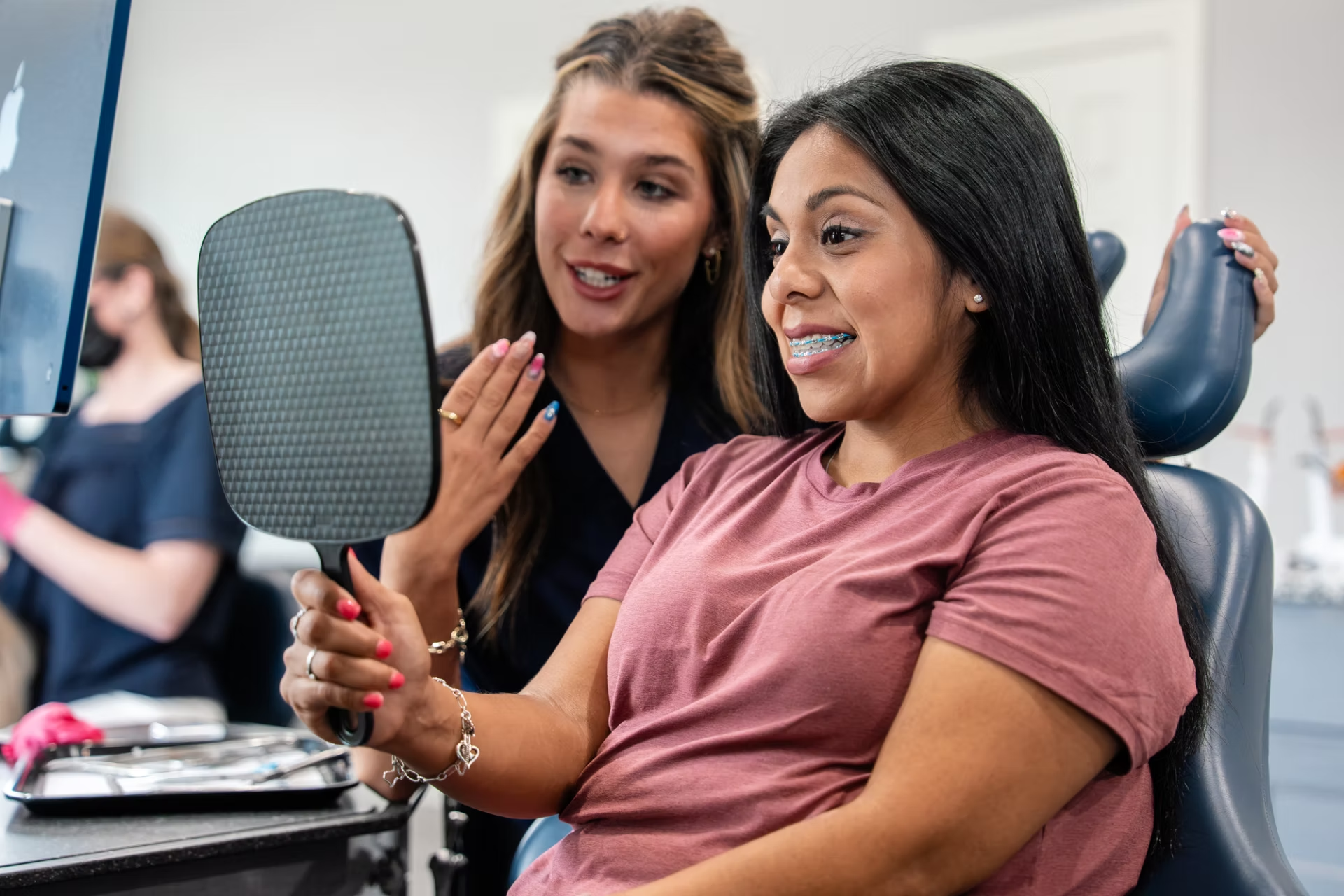
Choosing the right orthodontist shapes your smile for decades, so the decision deserves careful thought. Whether you’re a parent researching options for your child or an adult ready to upgrade your smile, picking the right specialist comes down to credentials, technology, treatment options, and whether the practice fits your family’s life. This guide walks you through what matters most, from board certification to financing, so you can feel confident before you even book a complimentary consult.
Finding a qualified orthodontist can feel like a big decision, especially when you’re weighing credentials and treatment styles at the same time. The good news is that once you know what to look for, the choice becomes much clearer. Here’s what you should look for before committing to a provider.
What Makes a Great Orthodontist?
A great orthodontist is a dental specialist who has completed 2-3 additional years of advanced training beyond dental school, focused exclusively on tooth movement, jaw alignment, and bite correction. That extra education is the single biggest difference between a general dentist offering braces and a true orthodontic specialist.
Here are the markers that set the best orthodontists apart from general providers:
- Specialty training. Orthodontists complete a residency devoted entirely to orthodontics after earning their DDS or DMD.
- Board certification. Look for the American Board of Orthodontics (ABO) credential. ABO certification is voluntary and signals a commitment to ongoing excellence.
- AAO membership. Membership in the American Association of Orthodontists means your provider follows the specialty’s leading standards of care.
- Local access. Patients visit their orthodontist every 4-8 weeks during active treatment, so a nearby practice saves real time.
When all four of these markers are present, you can feel confident that your provider has the training, credentials, and commitment to deliver lasting results.
How to Evaluate an Orthodontist: Step-by-Step
Choosing an orthodontist doesn’t have to feel overwhelming. Follow these six steps to narrow your options and find the right fit for your family.
- Verify credentials and board certification. Use the American Board of Orthodontics online directory to confirm your provider is ABO certified. Check that they completed an accredited orthodontic residency, not just a weekend course.
- Research treatment options offered. A well-rounded practice should offer braces, clear aligners, two-phase treatment for growing children, and specialty care such as TMJ/TMD and airway orthodontics. More options mean a better match for your specific needs.
- Read verified Google and Facebook reviews. Look for patterns in feedback, not just star ratings. Pay attention to comments about the team, wait times, communication, and how the practice handles concerns.
- Schedule a complimentary consult. A no-cost first visit gives you a chance to tour the practice, meet the team, and see the technology firsthand. Trust your gut on how the environment feels for you or your child.
- Compare financing and insurance acceptance. Ask for a written treatment plan that spells out everything included. Affordable monthly payment options and a transparent payment calculator should be easy to access.
- Confirm emergency care and appointment flexibility. Life happens. Make sure the practice offers emergency support for broken brackets or lost aligners, and that appointment times work with school and work schedules.
Taking these steps upfront protects you from surprises later. The right choice pays off in better outcomes, fewer headaches, and a smile you’ll love for life.
Key Benefits of Choosing the Right Orthodontist
The orthodontist you pick affects more than your final smile. It shapes your entire experience, from the first visit to the day your retainer arrives. Here’s what you gain when you choose a qualified specialist.
How Does Specialist Training Improve Outcomes?
Specialist-level training means your orthodontist can accurately diagnose bite issues, predict tooth movement, and plan treatment that holds up over time. Research from the American Association of Orthodontists consistently supports specialist care for complex alignment cases. That depth of training also helps a specialist spot subtle issues a general provider might miss, which protects you from needing retreatment later.
What Technology Should a Modern Practice Offer?
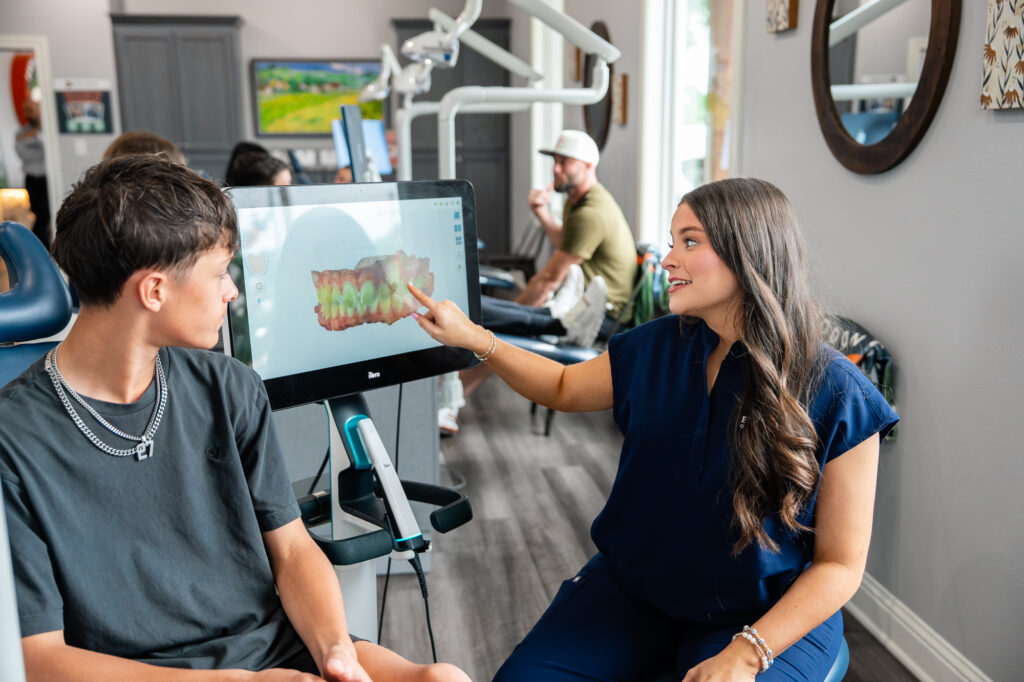
A modern orthodontic practice should use iTero digital scanners (no more goopy impressions), options like LightForce custom 3D-printed braces, and remote monitoring tools so you can check in from home between visits. This cutting-edge technology improves precision and often reduces chair time. When you tour a practice, ask to see the equipment in action so you can judge whether it feels current and well-maintained.
Why Does a Broader Treatment Menu Matter?
Beyond traditional braces and clear aligners, the strongest practices offer two-phase treatment for kids, TMJ/TMD care, airway orthodontics, and common appliances. One practice with every option means you won’t be bounced between providers if your needs change mid-treatment.
A few more benefits worth weighing as you compare options:
- Shorter treatment times. Accurate diagnosis and digital planning mean fewer surprises mid-treatment. When your orthodontist knows exactly where every tooth needs to go, you spend less time in braces or aligners.
- Transparent financing. Affordable monthly payment options and an online payment calculator make budgeting simple. You’ll know what to expect before you start, with no mystery fees.
- Long-term retention support. A great orthodontist doesn’t disappear after your braces come off. Retention planning protects your investment and keeps your teeth straight for life.
Choosing a specialist is about getting the training, technology, and ongoing care that make your results last.
Orthodontist vs. General Dentist: Key Differences
An orthodontist is a dental specialist who exclusively treats alignment and bite issues after completing 2-3 years of additional residency training beyond dental school. A general dentist focuses on overall oral health, cleanings, fillings, and crowns, and may offer basic alignment services as one of many offerings.
Here’s how the two compare:
| Factor | Orthodontist | General Dentist |
|---|---|---|
| Education | DDS/DMD + 2-3 year orthodontic residency | DDS/DMD only |
| Daily Focus | Tooth movement, bite correction, jaw alignment | Full-mouth care, cleanings, restorations |
| Technology | Advanced diagnostic imaging, digital scanners, custom appliances | General diagnostic and restorative tools |
| Case Complexity | Handles mild to severe malocclusion, TMJ, airway, two-phase | Typically limited to mild, straightforward cases |
| Board Certification | ABO certification available | No orthodontic-specific board |
For simple cosmetic shifts, a general dentist may be an option. For anything involving your bite, jaw, growth and development, or long-term stability, a board-certified orthodontist is the stronger choice. Specialists handle every type of case, from early intervention for kids to complex adult treatment.
Financing and Insurance
Every smile is different, so your treatment plan is always personalized to your case. Transparent financing and flexible payment options make treatment achievable for most families.
Here’s what shapes your treatment plan:
- Case complexity. Mild crowding is simpler than full bite correction with two-phase treatment.
- Appliance type. Traditional metal braces, clear ceramic braces, custom 3D-printed braces, and clear aligners each work a little differently.
- Treatment length. Shorter cases need fewer visits. Most treatment runs 12-24 months.
Medicaid coverage. In many states, Medicaid may cover orthodontic treatment for children under 21 when medically necessary, such as for severe malocclusion or cleft-related issues. Cosmetic cases typically aren’t covered. Eligibility usually requires a qualifying diagnosis from an approved provider.
Financing options. East Texas Orthodontics offers affordable monthly payment options and flexible in-house financing, including zero-interest plans. Many families also use HSA/FSA funds to spread out costs.
Questions to ask. Always ask whether records, retainers, and future refinements are included in your treatment plan, so there are no surprises.
Who Should See an Orthodontist and When
Orthodontic care isn’t just for teens with metal braces. Here’s when a specialist evaluation makes sense across every stage of life.
- Children by age 7. The AAO recommends every child have a first orthodontic evaluation no later than age 7. Early visits catch jaw development issues while there’s still time to guide growth naturally.
- Kids who may need two-phase treatment. Signs include crowding, crossbite, thumb-sucking effects, difficulty chewing, or a jaw that looks too narrow. Two-phase treatment uses early intervention plus a second round of care in the teen years for the best long-term outcome.
- Teens considering braces or clear aligners. Most teens are candidates for either option. The right choice depends on case complexity, lifestyle, and personal preference.
- Adults ready to upgrade their smile. Adult orthodontics is more common than ever. Clear aligners and low-profile braces make treatment discreet, and it’s never too late to get the smile you want.
- Anyone with TMJ/TMD or airway concerns. Jaw tension, clicking, headaches, chronic mouth breathing, or sleep-disordered breathing warrant specialist evaluation. East Texas Orthodontics offers targeted care for both.
If you’re unsure whether you or your child needs treatment, a complimentary consult is the easiest way to find out.
Frequently Asked Questions
When should you see an orthodontist vs. a dentist?
See a general dentist for routine cleanings, fillings, and overall oral health. See a board-certified orthodontist for anything involving tooth alignment, bite correction, jaw issues, TMJ, or airway concerns. For complex or long-term alignment work, a specialist’s training delivers better results.
Does Medicaid cover braces?
In many states, Medicaid may cover orthodontic treatment for children under 21 when it’s medically necessary, such as for severe malocclusion, cleft lip and palate, or related craniofacial conditions. Purely cosmetic cases are not typically covered. A qualifying diagnosis from an approved provider is required for approval.
Can my child get braces for free?
Possibly, if your child qualifies for Medicaid and has a medically necessary orthodontic condition that meets state coverage criteria. Approval requires evaluation and documentation from an approved provider. A complimentary consult with a board-certified orthodontist can help you understand eligibility and next steps.
What qualifications should an orthodontist have?
Look for a DDS or DMD degree, completion of a 2-3 year accredited orthodontic residency, American Board of Orthodontics (ABO) certification, and membership in the American Association of Orthodontists (AAO). These four credentials together signal that your provider has the training and ongoing accountability to deliver quality care.
How often will I need to visit the orthodontist during treatment?
Most patients visit every 4-8 weeks during active treatment for adjustments and progress checks. Clear aligner patients may visit less often, especially when using remote monitoring tools to check in between in-office appointments. Your orthodontist will set a schedule based on your specific plan.
How can I plan for the cost of braces?
Every treatment plan is personalized, so the best way to plan is to understand what shapes it: case complexity, treatment length, and appliance type. East Texas Orthodontics offers affordable monthly payment options and an online payment calculator so you can see what your budget looks like before your consultation.