

Invisalign vs. Traditional Braces: What Each Option Actually Is
Choosing between Invisalign and traditional braces is the question our team hears most often at complimentary consults. The honest answer? Both work beautifully when the appliance matches the case.
Traditional braces come in more than one style. Metal brackets are the classic option and remain the workhorse of orthodontics, while ceramic (clear) brackets blend in with your natural tooth color for a lower-profile look.
Clear aligners also come from several manufacturers. Invisalign is simply the most recognized brand name, and other systems use the same basic principle of sequential trays that shift teeth in small increments.
At East Texas Orthodontics, we offer both braces and clear aligners, so the recommendation you get is based on your bite rather than on what happens to be available.
How Each Treatment Moves Your Teeth
Braces move teeth through brackets bonded to each tooth and an archwire that’s adjusted at checkups every 4-8 weeks. Clear aligners move teeth through a series of custom trays worn 20-22 hours a day and swapped every 1-2 weeks. Both follow a planned sequence mapped out by your orthodontist.
With braces, treatment typically looks like this:
- Brackets are bonded to the front (or, in some cases, the back) of each tooth.
- An archwire connects the brackets and delivers gentle, continuous force.
- You come in every 4-8 weeks for wire changes and progress checks.
- Elastics, springs, or expanders are added when a bite correction calls for them.
- The appliance is removed and retainers are delivered once teeth reach their planned positions.
With clear aligners, the process runs a little differently:
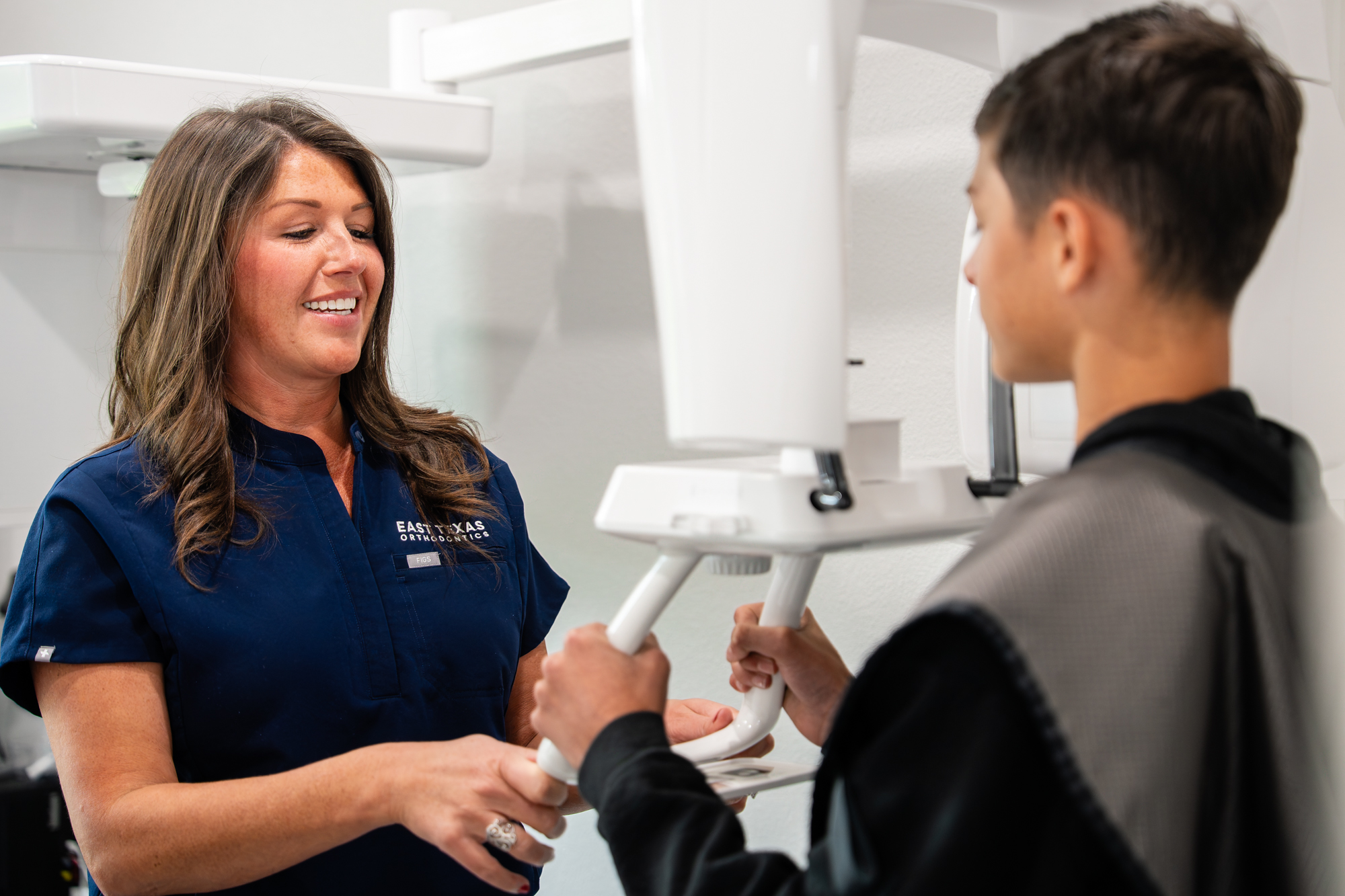
- We capture a digital scan of your teeth with our iTero scanner. No goopy impressions.
- Your orthodontist designs a 3D treatment plan and reviews the projected tooth movements with you.
- Your custom trays arrive, and you wear each set 20-22 hours daily.
- You change trays every 1-2 weeks, exactly as directed.
- Small tooth-colored attachments and elastics handle rotations, bite correction, and other tricky movements.
One more difference worth knowing: aligner patients who wear their trays faithfully can qualify for Dental Monitoring, which lets our team track progress through your phone and can cut down on in-person visits. That’s a real advantage when your schedule is packed with work, school, and weekend ball games.
Benefits of Invisalign and Benefits of Braces
Each appliance has genuine strengths. Here’s how they compare in daily life.
Benefits of clear aligners:
- Nearly invisible in photos, on video calls, and across a conference table
- Removable for meals, so nothing is off-limits at dinner
- Brushing and flossing stay simple because you take the trays out first
- No brackets or wires to poke your cheeks and lips
- Fewer emergency visits, since there’s no loose bracket to repair
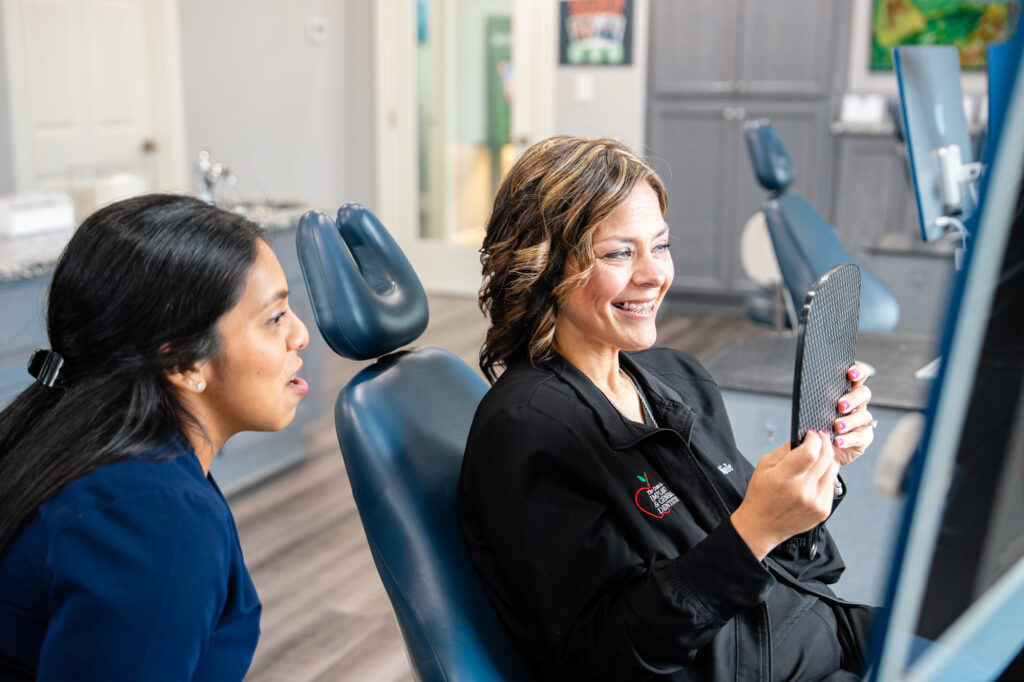
- A digital preview of your projected smile before you ever start
Benefits of traditional braces:
- Fixed to your teeth, so they work 24 hours a day with no remembering required
- Excellent control over severe rotations, impacted teeth, and significant bite discrepancies
- A reliable choice for growing patients who also need expanders or other appliances
- Colored elastics that let kids and teens change their look at every visit
- No trays to lose in a napkin at lunch
Compliance is the real dividing line. Braces keep working whether you think about them or not, while aligners only move teeth during the hours they’re actually in your mouth.
Both deliver confident smiles when the case is matched to the right appliance, and finding that match is exactly what a complimentary consult is for.
Invisalign vs. Braces: Side-by-Side Comparison
Weighing Invisalign vs. traditional braces gets easier when you see the practical differences lined up in one place.
| Factor | Clear Aligners (Invisalign) | Traditional Braces |
|---|---|---|
| Appearance | Virtually invisible when worn | Visible metal brackets; ceramic brackets blend in |
| Removability | Removable for eating, brushing, photos | Fixed until treatment is complete |
| Comfort | Smooth plastic edges; brief tightness with new trays | Brief soreness after adjustments; wax helps with irritation |
| Hygiene | Brush and floss normally with trays out | Requires threading floss and careful brushing around brackets |
| Visits to the practice | Every 6-10 weeks; Dental Monitoring may reduce visits | Typically every 4-8 weeks for adjustments |
| Food restrictions | None, since trays come out to eat | Avoid hard, sticky, and chewy foods |
| Case complexity | Great for mild to moderate cases and many complex ones | Handles the most complex bites and tooth movements |
| Compliance required | High; trays must be worn 20-22 hours daily | Low; the appliance stays on your teeth |
| After treatment | Retainers required | Retainers required |
A few notes on that table.
Treatment time is often similar between the two. What actually drives your timeline is how far your teeth need to travel and how consistently you follow instructions, not which appliance you choose. When families ask us to compare Invisalign vs. traditional braces on speed alone, that’s the detail that surprises them most.
Food is a genuine lifestyle factor. Braces mean skipping popcorn, ice, caramel, and crunchy nuts for the duration, while aligners come out before every meal.
Hygiene deserves its own line, too. Cleaning around brackets and wires takes more patience and a few extra tools, while aligner patients pop the trays out, brush and floss the way they always have, and rinse the trays before putting them back in.
And retainers aren’t optional with either one. Teeth naturally drift over a lifetime, so wearing your retainer as prescribed is how you protect a smile that lasts a lifetime. At East Texas Orthodontics, retainers are built into every plan, whichever appliance did the moving.
What Affects the Cost of Invisalign and Braces
Invisalign and traditional braces often cost about the same when case complexity is similar. Your total investment depends on how much movement your teeth need, how long treatment runs, which additional appliances are required, retainers, and follow-up care. Insurance orthodontic benefits generally apply to both options at the same level.
| Cost Factor | How It Affects Your Total |
|---|---|
| Case complexity | More crowding, spacing, or bite correction means more movement and more materials |
| Treatment length | Longer timelines involve more trays, more adjustments, and more visits |
| Additional appliances | Expanders, elastics, or attachments can add to the plan |
| Retainers | Included in your plan; replacements after treatment carry a separate cost |
| Insurance benefits | Many plans include a lifetime orthodontic benefit that applies to either option |
The short version on cost: complexity and treatment length drive the number, the appliance itself rarely does, and the same lifetime orthodontic benefit usually applies whichever route you take.
Here’s what we tell every family: national average price ranges you find online rarely reflect what your specific case will cost. A short exam with records gives you an exact number, not an estimate.
We also offer affordable payment options, and there’s a payment calculator on our website so you can see what a monthly figure might look like before you ever sit in the chair. HSA and FSA dollars can typically be applied to orthodontic care as well, which lowers your out-of-pocket cost.
How to Choose: Who Is a Good Candidate for Each
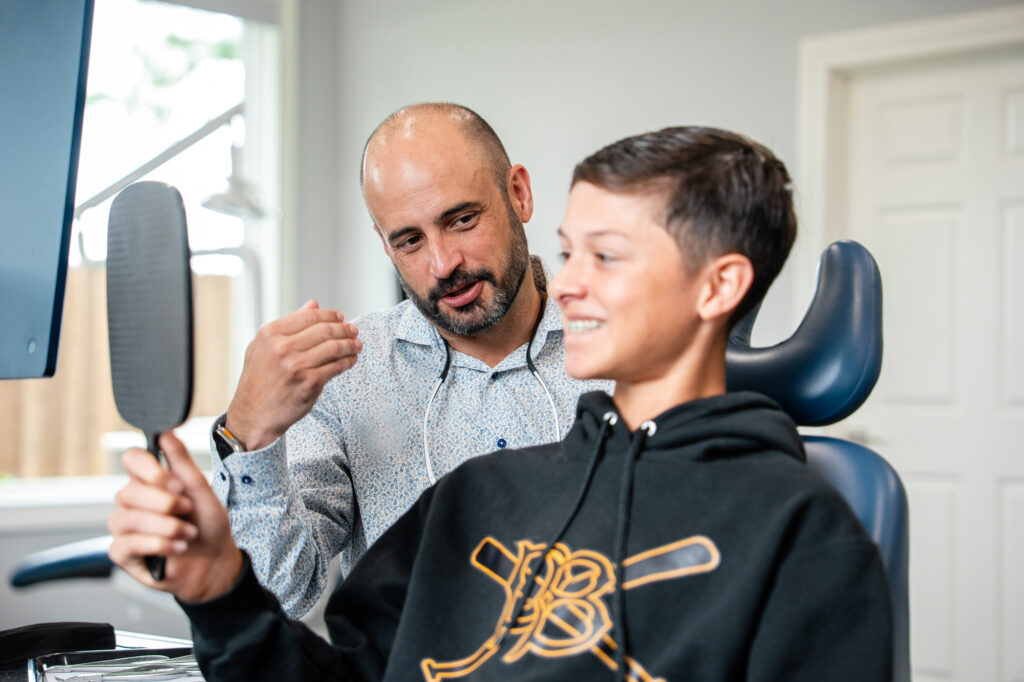
Clear aligners are a strong fit for adults and responsible teens with mild to moderate crowding or spacing who will commit to 20-22 hours of daily wear. Braces are the better call for severe crowding, larger bite corrections, impacted teeth, and growing children who need an expander. An exam with a board-certified orthodontist, including X-rays and a digital scan, settles the question quickly.
Three variables drive that recommendation: the complexity of your bite, your age and growth stage, and how consistent you’ll realistically be with wear time.
Clear aligners tend to be a strong fit for:
- Adults with mild to moderate crowding or spacing
- Patients whose teeth have shifted years after previous treatment
- Responsible teens who won’t forget to put their trays back in
- Professionals, performers, and anyone who’d rather treatment go unnoticed
- Patients who want an easier time with brushing and flossing
Braces are often the better recommendation for:
- Severe crowding or teeth that need significant rotation
- Larger bite discrepancies that require elastics and precise control
- Impacted teeth that need to be guided into position
- Growing children who also need an expander or other appliance
- Anyone who knows, honestly, that a removable tray won’t stay in
Lifestyle matters more than people expect. Contact sports, wind instruments, a demanding work schedule, and even braces-friendly meal planning all come up during consults, and they should.
Younger patients add another layer. According to the American Association of Orthodontists, children should have their first orthodontic checkup by age 7, which is when early bite issues become visible. Two-phase treatment and airway-focused care frequently call for fixed appliances or growth-guiding devices that a tray alone can’t provide. The American Association of Orthodontists also notes that orthodontic care is no longer limited to childhood, with adults making up a sizable share of patients in treatment today, which is part of why clear aligners have become so popular.
Orthodontics is for everyone, and there’s rarely only one workable answer. Dr. Matthew Brown and Dr. Mason Borth are certified by the American Board of Orthodontics, and our orthodontists are members of the American Association of Orthodontists, so the trade-offs between Invisalign vs. traditional braces get explained by specialists who watch both appliances succeed every week. Your first visit is a complimentary consult with no obligation attached, and our convenient locations make it easy to be seen close to home. Start your smile journey and experience the East Texas Orthodontics difference.
Frequently Asked Questions About Invisalign vs. Braces
Is Invisalign as effective as braces?
For most cases, yes. Clear aligners can correct crowding, spacing, and many bite issues just as effectively as braces when they’re worn 20-22 hours a day. Very complex cases involving severe rotations, impacted teeth, or major bite discrepancies are sometimes better handled with fixed brackets, which is why an in-person evaluation matters.
Which is faster, Invisalign or braces?
Treatment times are often comparable. Case complexity and patient compliance influence your timeline far more than the appliance itself. A straightforward aligner case can finish quickly, while a complicated one may take just as long as braces would.
Does Invisalign hurt less than braces?
Most patients report mild pressure or tightness for a day or two after switching to a new aligner tray, which is similar to the soreness felt after a wire adjustment with braces. Aligners do have one comfort advantage: smooth plastic edges instead of brackets and wires that can irritate cheeks and lips. Any tenderness usually fades within a couple of days.
Can teens get Invisalign instead of braces?
Absolutely. Clear aligners are designed for teen patients and include features like compliance indicators that show whether trays are being worn enough. The deciding factors are case complexity and whether your teen will keep the trays in during school, practice, and hangouts with friends.
Can I switch from Invisalign to braces mid-treatment?
Yes, switching is possible if your progress stalls or your case turns out to need more control than trays can deliver. Your orthodontist will review your records and discuss any change in timeline or cost before making the switch. Some patients also finish with a short round of braces to refine specific details.
Do both require retainers afterward?
Every orthodontic patient needs retainers, no matter which appliance moved their teeth. Teeth shift naturally throughout life, and retainers hold your teeth in their corrected positions. Wearing yours as prescribed is the single best thing you can do to keep your confident smile holding steady for years to come.